Going to school, playing in the park and making memories as a family – all these beautiful moments in life are ones that your child deserves to see in all their glory.
With 80% of children’s learning presented visually, it’s super important to look out for their eye health to ensure they get the most out of their education, development and overall childhood.
If you’re starting to spot changes in your child’s eyesight, it could be myopia. But don’t worry, we’ve got everything you need to know about the eye condition.
What is myopia?
Myopia, is the medical word for short-sightedness. It's a common condition that makes seeing objects at a distance appear out of focus. For example, when watching the TV, the screen may seem blurry compared to when reading a book. It can usually be corrected by wearing prescription glasses or contact lenses.
Typically, myopia starts during childhood (anywhere between ages six to 13), but it can develop in adults too.
What causes myopia?
Myopia usually occurs when the eyes grow slightly too long – this means the distance between the cornea (the transparent layer at the front of the eye) and the retina (the light-sensitive tissue at the back of the eye) are too far apart. So each time light enters the eye, it’s focused before it reaches the retina, meaning the eyes can’t create a clear image of objects in the distance.
Myopia can also be caused by the cornea being too curved or if the lens is too round, causing the light rays to fall in front of the retina.
It’s not uncommon for myopia to run in families, with children having a 31% chance of developing myopia if one parent is myopic and rising to 46% if both parents are.
See the checklist for signs of myopia
Signs that your child may have myopia include:
-
Sitting too close to screens
-
Complaining of regular headaches
-
Losing concentration easily
-
Repeatedly rubbing or squinting their eyes
Myopia can also get worse until the eye has stopped growing, which is usually around 20 years old.
How do I know if my child has myopia?
While some of the above symptoms are tell-tale signs your child may have myopia, if they fail to communicate their symptoms with you (like having headaches or noticing eyestrain), there are other key signs you can look out for. These include clumsiness, lack of concentration, difficulty reading words from a distance, such as a school whiteboard, falling behind on schoolwork and fatigue, in some cases.
If you notice any of these signs and you’re concerned your child may have myopia, it’s best to book them into your local Boots Opticians for an eye test (if they’re under 16 or under 19 years old and in full-time education, they’re entitled to a free NHS eye examination). You can book an eye test online, in-store using our store locator or by calling 0345 125 3752.
We've got solutions that help slow down the progression of myopia
Although there’s no cure for myopia, the good news is that it can be treated with corrective glasses or contact lenses which work by changing the way the central light rays bend into the eyes.

MiSight® 1 day contact lenses
You may want to consider MiSight® 1 day contact lenses, designed specifically for children. These daily disposable lenses use ActivControl® technology to provide clear vision while helping to reduce the signal that’s telling the eye to grow too long, therefore slowing the progression of myopia**
Essilor® Stellest® lenses
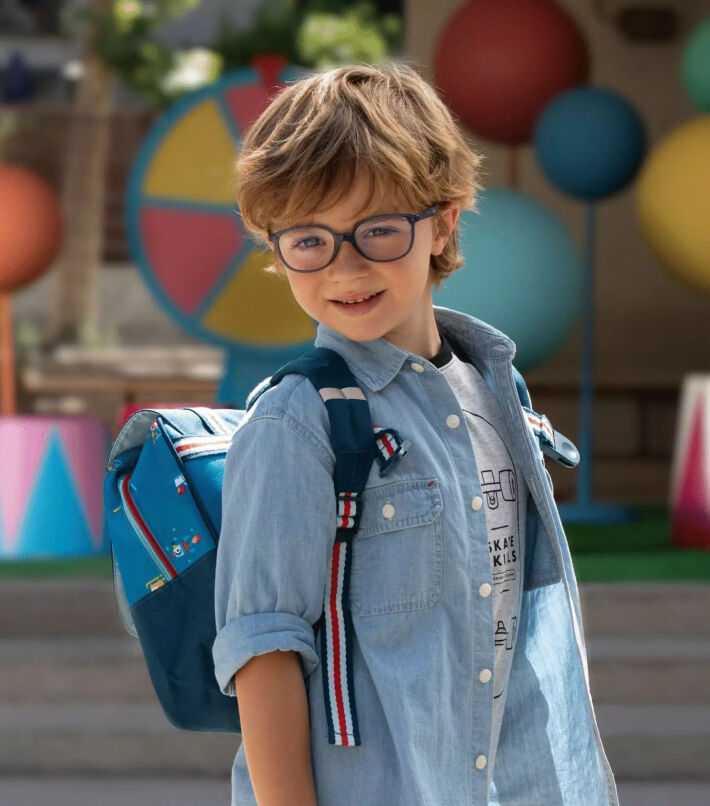
Stellest lenses. These are their latest innovation to slow down myopia progression in children. Essilor® Stellest® lenses slow down myopia progression by 67% on average, compared to single vision lenses, when worn 12 hours a day***
Star Fit
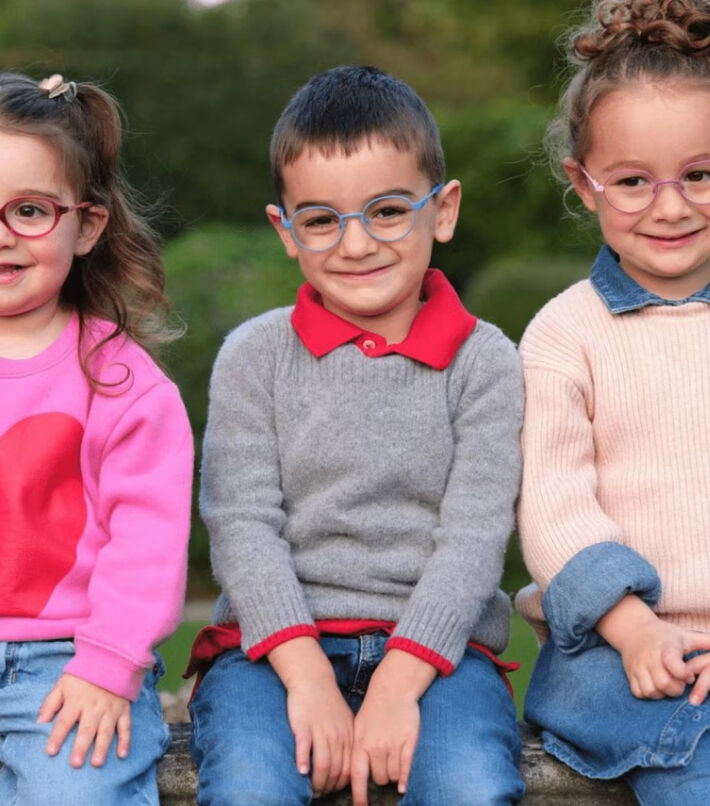
Star Fit is a collection of eyewear designed and tailored specifically for children aged 2 and over. Children regularly look upwards and as a result they end up gazing over their lens. The Star Fit collection has been designed to balance the technical requirements of children's eyewear with the child’s comfort, safety and sight in mind
Although there’s no cure for myopia, the good news is that it can be treated with corrective glasses or contact lenses which work by changing the way the central light rays bend into the eyes.
Other things you can do to help include:
-
Spending plenty of time outdoors – it’s recommend children get around two hours of outdoor exposure per day
-
Limiting screen time where possible
-
Taking regular breaks from focusing on nearby objects, such as books
What happens during an eye test?
It’s important to take your child for regular eye checks to help detect any problems early on.
Generally, your child’s eyes will be checked:
-
Within 72 hours of being born
-
Between six and eight weeks old as part of a follow-up examination
-
Between one and two years old
It’s also recommended that all children have an eye test before starting school and then at least every two years after or as recommended by an optometrist. The sooner any problems are detected, the sooner you can find a solution that’ll help them in the long run.
An eye test will be able to tell you:
-
How well your child can see
-
How healthy their eyes are
-
If there are any problems with your child’s vision
During your child's eye test, the optometrist may carry out a series of tests, including:
Snellen and LogMAR charts
Holding up rows of letters and numbers (or pictures and symbols for younger children) of decreasing sizes to see if your child can see them from a specific distance.
Range of movement
This tests how well the eye muscles work by moving a certain object to eight different positions.
Refraction test
This involves looking at a light or reading letters from a chart while different lenses are placed in front of the eyes to help identify any sight problems. This test also helps determine what type of lenses could help correct any vision difficulties.
Stereopsis
This checks that your child's eyes are working well together, as well as testing if they can see things in three dimension.
If the eye test results indicate that your child needs glasses or contact lenses, the optometrist will discuss your next steps.
Next steps
-
Book your child in for an eye test at Boots Opticians if you’re concerned they’ve got myopia or if it’s been two years since their last test
-
Visit your local store and speak with one of our opticians for advice
Related articles
Terms and conditions
*Local rates apply from BT landlines in the UK and other providers' charges may vary. All calls will be recorded or monitored for quality and training purposes.
**Compared to a single vision 1 day lens over a 3 year period.
***Bao J, et al. Spectacle lenses with aspherical lenslets for myopia control vs single-vision spectacle lenses: a randomized clinical trial. JAMA ophthalmology. 2022;140(5):472-8