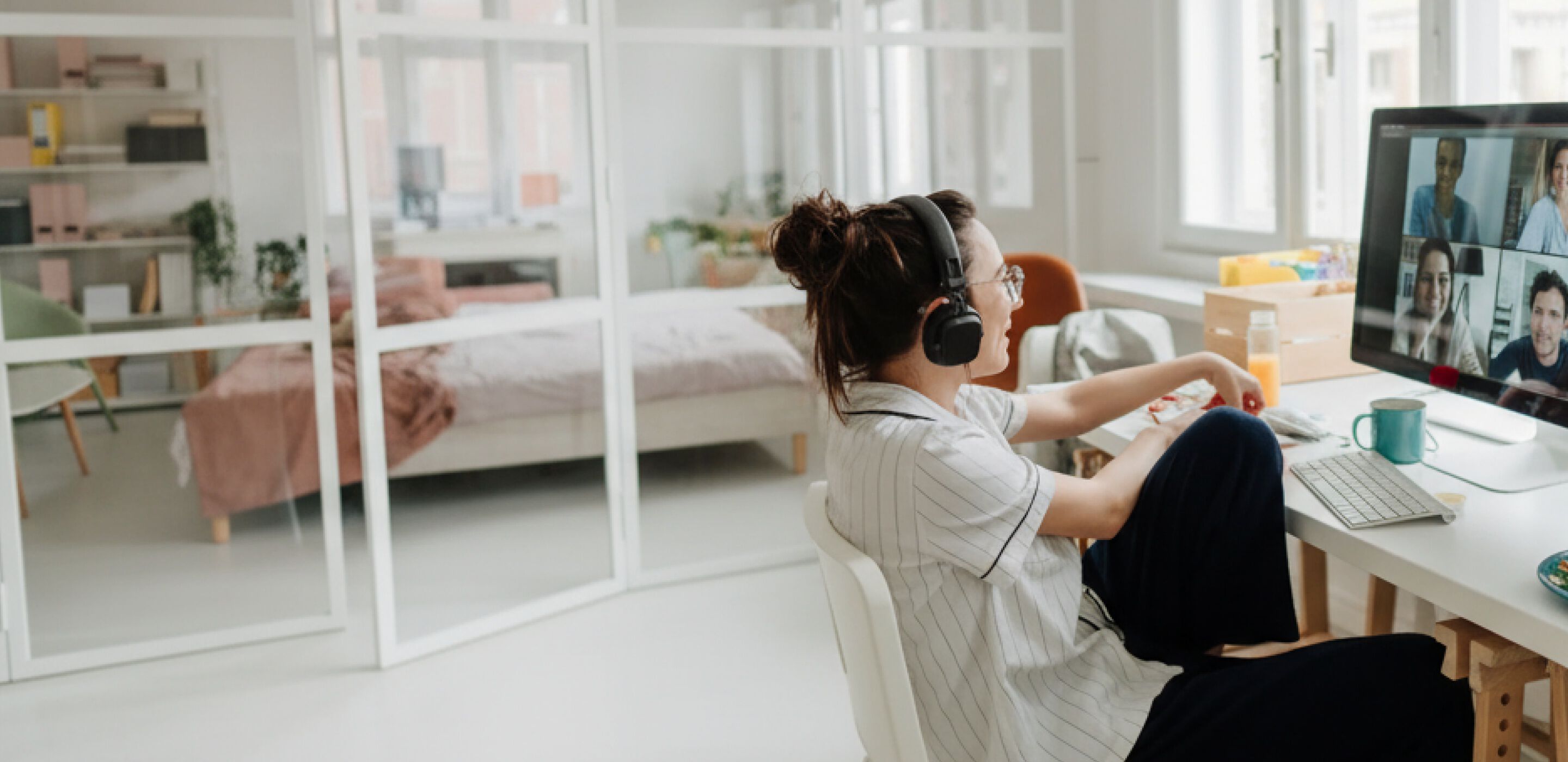
If you work from home, whether that’s in your home office or kitchen table, you’re probably spending more time in front of a screen. It can mean that some in person meetings are taking place via video links. Unless you have a good routine in place, you may not move around your home in the same way you would in an office, and this can affect your eye health. With such working habits, it’s important that you consider how you can take care of your eyes. You can find out more about how to keep your eyes healthy through diet, habits and more here.
Follow the 20-20-20 rule
Looking at the faces and expressions of colleagues on a screen probably means we’re now focusing at a much closer range more often. So, it’s important to take regular breaks and allow our eyes to relax.
The 20-20-20 rule can help relax your eyes. Start by looking at something 20 feet away, for 20 seconds, every 20 minutes – that will help give your eye muscles a break.
Be mindful of glare
The glare from our screens and the lighting in home offices can affect eye health. Lighting should be set at a level that allows paper documents and screens to be easily read. You can also use an anti-glare screen on your monitor if you have one. If you don’t, try to close the blinds or curtains on any windows reflected on your screen. You can also adjust your screen brightness to help reduce eye fatigue.
Blink regularly
Blinking regularly helps to keep your eyes lubricated, so if you do find you’re struggling with dry eyes, lubricating drops can help to relieve discomfort.
Consider blue light lenses
While there’s no evidence to suggest blue light can cause eye strain, this doesn’t mean your devices aren’t a contributing factor to tired, dry eyes. You can consider purchasing a prescription set of glasses solely for use when on the computer. Find out more about the blue light products that are available at Boots Opticians and whether they would be beneficial to you. You might also be interested in exploring what lenses are suitable for your lifestyle.
Book an eye test at least every two years
Regular eye tests are important, especially if you are experiencing symptoms of digital eye strain. If your prescription has changed over time and you haven’t had an eye test, your vision can strain your eyes even more. Even with a mild prescription, wearing the correct glasses or contact lenses will make a huge difference to how your eyes feel throughout the day. There are also anti-reflection coating options to have on your glasses that you can discuss with your optician.
Related articles